
How to Build Confidence in Kids Who Say “I Can’t”
Masters Path Karate · Parent guides
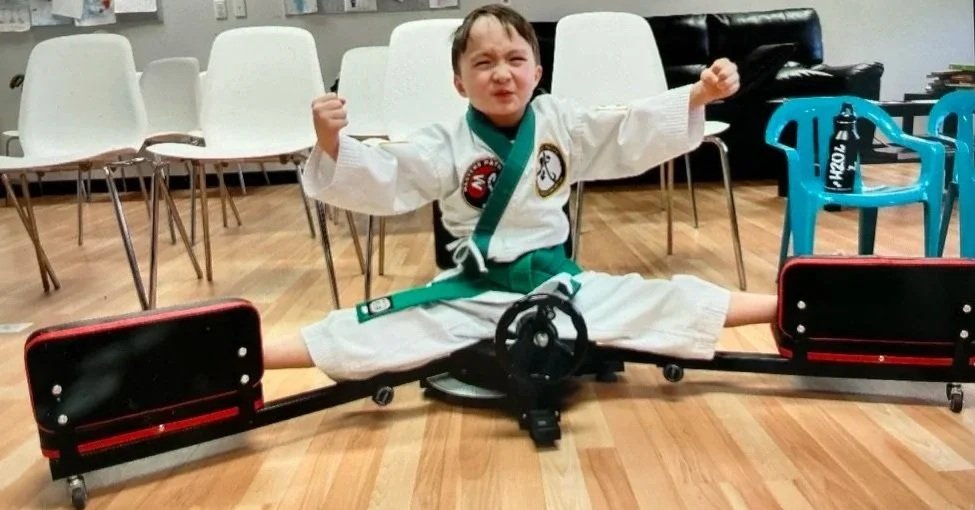
Working on flexibility at Masters Path Karate.
You know your child is capable. That is part of what makes “I can’t” so difficult to hear.
It might be a page of homework. It might be a new class they were excited about until you reached the door. You offer a little encouragement, then a bit more, then hear yourself saying, “You haven’t even tried yet.” Somehow, you are now arguing about the thing you were trying to help with.
Afterwards, you wonder whether you should have handled it differently. Were you pushing too hard? Or should you have been firmer? You want your child to feel supported, but you also want them to discover that they can cope with a challenge.
That is a difficult balance, especially at the end of a long day. Parents have tired, impatient moments too.
When we talk about building confidence in children, this is the part that deserves more attention: what happens between getting stuck and deciding to have another go. There is a lot an adult can do in that space. Why does my child say “I can’t”?
The same words can mean several things. Your child might not understand the instructions. They might know what to do but feel embarrassed about doing it in front of other people. They could also be tired, frustrated or worried about repeating an earlier mistake.
Try asking, “Which part are you stuck on?” or “What do you think might happen if you try?”
Give them time to answer. It’s easy to ask a question and immediately supply three possible answers yourself. Like when you start chewing air when feeding a baby, you don’t have to answer for them.
If they do not understand the task, show them the part that is confusing. If they are worried about being laughed at, take that seriously and ask what has made them expect it. Those situations need different responses.
A long conversation about believing in themselves will not explain a maths question they have misunderstood. Find the actual difficulty before deciding how to help.
When “this is hard” becomes “I’m no good”
A child who says “I’m stupid” after getting a sum wrong has given themselves a much harder problem than the one on the page.
You can help them work through the sum. It is harder to help when they have already decided the mistake proves something about them.
The same thing can happen in an activity. They lose their balance, miss the ball or forget what comes next, and suddenly they are “rubbish at it.” One attempt becomes a judgement about whether they belong there at all.
It is worth slowing that moment down. “Show me where you got stuck” gives you something you can look at together. Perhaps they missed an instruction. Perhaps they understand what to do but need more practice. Perhaps being watched is making everything feel harder.
Whatever the difficulty, keep the conversation close to it. A child can work on remembering which foot goes first. “Be more confident” is a much bigger and less useful job to hand them.
That also means giving them time to answer, think and try. Adults are quite good at asking a question and then answering it ourselves three seconds later. We can be halfway through solving the problem before the child has picked up their pencil.
Some help, followed by a little patience, gives them a chance to discover what they can manage. And if they still need help, they should be able to ask for it without feeling they have failed again.
What happens when they get it wrong?
If you are choosing an activity to help your child build confidence, pay attention to what happens when somebody struggles.
An instructor can look impressive demonstrating a skill they have practised for years. The more revealing moment is when a beginner misunderstands, gets distracted or needs the explanation again. How does that instructor respond? How do the other children respond?
Taking part means letting other people see you learning. For a child who is worried about looking foolish, that can be a big ask.
Picture a beginner walking into a karate class. Other children know where to stand. They recognise the instructions. Some can perform movements the newcomer has never seen before. It is easy to understand why a child might look around and think everyone else is good at this already.
What they cannot see is how those children looked when they started: the wrong foot, the forgotten movement, the times someone had to explain it again. They are comparing their first attempt with somebody else’s practice.
The instructor’s job is to give that beginner something they can understand and work on, then stay patient as they try it. “Move this foot a little further forward” gives a child something to do, even if they are still feeling nervous. They can make that adjustment and feel the difference for themselves.
There should be standards in the room. Children need to listen, treat their partners properly and learn to control their movements. An instructor can expect those things while being patient with someone who is learning. Correction should leave a child clearer about what to do next.
That is why the teaching matters so much when we talk about karate for children. The uniform and the belt cannot do that work for us. As instructors, we are responsible for how a child is treated while they learn.
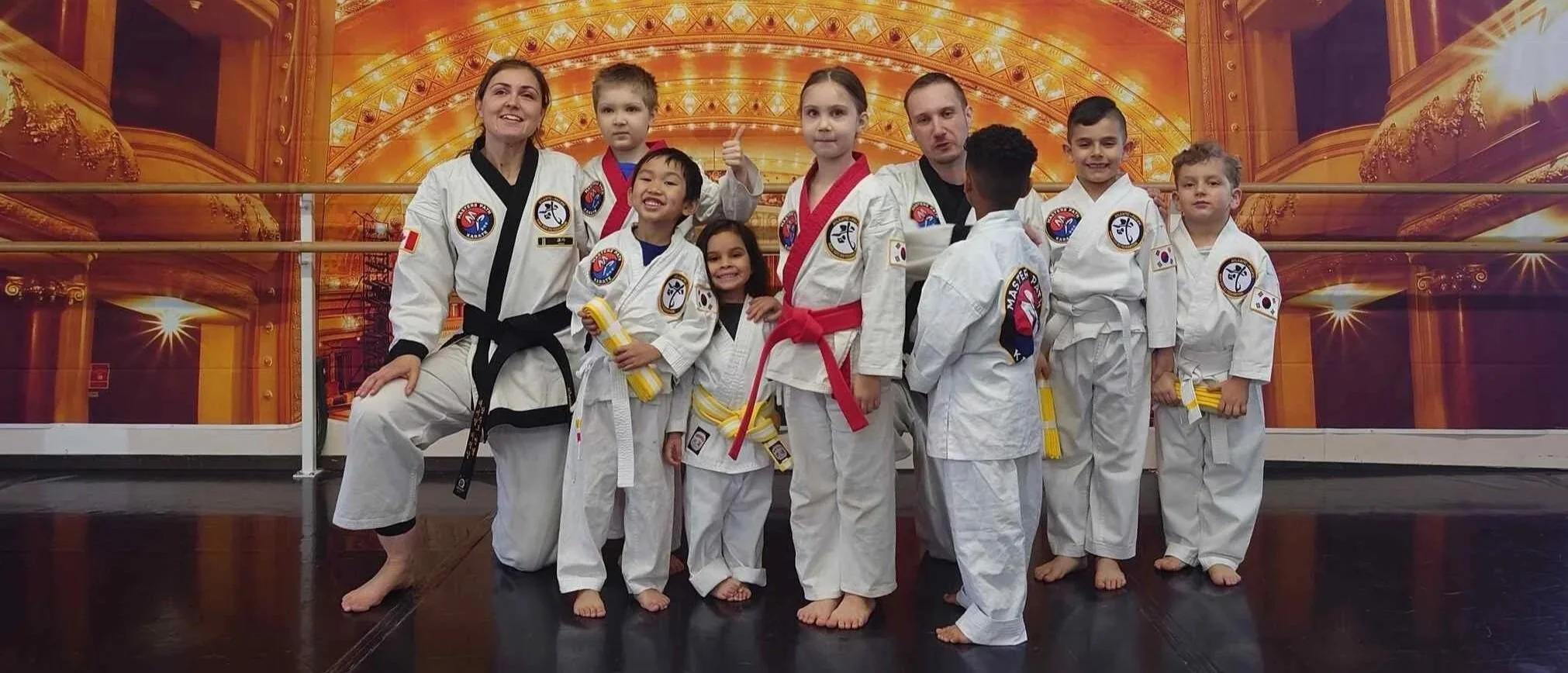
Children and instructors celebrating at Masters Path Karate
There is more to notice than who is best
Some progress is easy to celebrate. A new belt, certificate, or technique finally coming together. Those moments deserve their photos and proud faces.
Other progress is easier to miss. A child asks a question they would usually keep to themselves. They join a partner without needing you to assign one. They make a mistake, listen to the correction and carry on.
From the side of the room, it may look like an ordinary lesson. For a child who found it difficult to walk through the door, it may have taken a lot to get there. The hardest class is often the first.
Let them know you noticed. “You went over and joined in by yourself today” tells them exactly what you are pleased about. Give them room to tell you how it felt, too. Something you thought would be difficult may have been fine; something you barely noticed might be the part they want to talk about.
A quiet child may always be fairly quiet. They can still learn to ask for help, say what they think and take pride in what they can do. Confidence should give them more freedom to participate as themselves.
At home, ask them to show you something they have been working on. Let them be the person who explains it for a change. You might get a full demonstration in the kitchen. You might get “dunno” and a request for a snack. Either way, you have shown an interest without turning the journey home into a review of their performance.
There will still be difficult days. One good lesson will not settle every worry, and one bad lesson does not wipe out what they have learned. Over time, what you hope they collect is enough experience of working through difficulty to give the next unfamiliar thing a chance.
You can be proud of them while there is still plenty for them to learn. Make sure they know that.
Can karate help a child become more confident?
Karate offers practical opportunities to learn a skill, receive feedback and try again. For a child who often says “I can’t,” a clear task and a manageable correction can give them something useful to work on.
Take a front kick; a beginner might first practise lifting their knee and putting their foot down with control. As that becomes more familiar, the instructor can introduce the next part of the movement.
The child has a specific task to attempt and a way to notice improvement. They can see whether they held their balance or followed the instruction more successfully than before.
At Masters Path Karate in Calgary, beginner training includes karate basics, pad work, partner drills and games. Alongside the physical skills, children have opportunities to practise listening, following instructions, taking turns and working with others.
The teaching matters. Look for an instructor who explains clearly, corrects respectfully and gives beginners time to learn. An impressive demonstration tells you less about your child’s likely experience than watching how the instructor helps someone who is struggling.
You can also help your child reflect on their practice. Ask what helped them learn a movement and whether any part of that approach might help with something else they find difficult.

A birthday celebration at Masters Path Karate.
Try a children’s karate class in Calgary
If your child is interested in martial arts, a trial gives your family a chance to meet the instructors, experience a class and ask questions.
At Masters Path Karate in Vista Heights, northeast Calgary, we teach traditional Tang Soo Do with an emphasis on confidence, focus, respect and self-control.
Choose the introduction that fits your child:
When you book, tell us what your child hopes to try and anything that might make starting difficult. Bring comfortable clothing, a water bottle and your questions. No previous martial arts experience is needed.