
Your Child Isn’t the Best in the Room Yet, and That’s OK
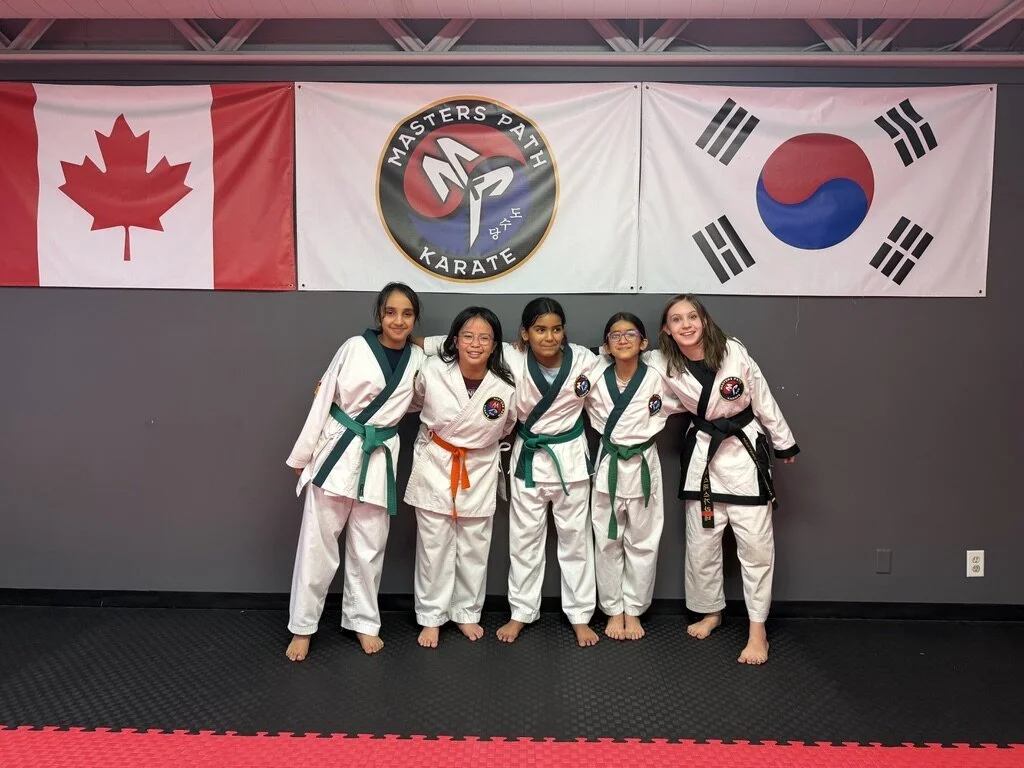
Martial arts has a rather useful habit of introducing children to people who are currently better at something than they are.
Your child might practise hard and still watch another student learn faster. Somebody who started later might catch them up, and occasionally a younger student will do something better than them, which is rarely welcomed as an important personal-development opportunity at the time.
Children need to learn that somebody else's success doesn't take anything away from them. Another student receiving a belt doesn't make their own belt less valuable, and somebody progressing faster doesn't mean they are failing. They can learn from people who are ahead of them, congratulate them and continue working on their own progress.
We spend a lot of time encouraging children to believe in themselves, which is important, but there is another side to healthy confidence: being secure enough to see somebody else doing well without needing to diminish them or themselves.
Starting at the Bottom Again Is Healthy
We see this every time students move into a more advanced program.
A student may have spent months becoming one of the strongest people in their class. They know the routines, they understand what is expected and perhaps younger or newer students have started looking to them for help. Then they progress into the next program and suddenly they are training beside people who know more, move better and have been there much longer.
For some children, that can be quite an adjustment. They might go from confidently performing everything in one class to regularly looking across at somebody else thinking, “How on earth did they do that?” I actually love that stage.
It gives them somewhere to go. They have people in front of them showing what the next level looks like, and instead of us simply telling them what they might become, they can see it happening a few feet away.
A more experienced student might have better control, sharper technique or the confidence to perform something in front of everyone without looking remotely worried. Your child watches them and begins picking up little things without even realising it. They see how they behave, how seriously they train and how they respond when an instructor corrects them.
That raises the standard of the whole room.
Children Learn From More Than Their Instructor
Instructors obviously play a huge role in a student's development, but children also learn constantly from the people around them.
Sometimes a student sees another child perform a difficult technique and suddenly wants to try harder themselves. Sometimes they notice that one of the best students in the class still gets corrected and realise that improvement never really ends. They might see an advanced student make a mistake, laugh it off and try again, which is often far more reassuring than being told a hundred times that mistakes are okay. They also get to see what consistency looks like.
The students they admire usually didn't wake up one morning magically good at martial arts. Your child might not have seen the months or years of training that came before, but over time they begin to understand that the people ahead of them earned their ability.
That can completely change the way they look at somebody who is better than them. Instead of thinking, “They're better, so I'm bad,” they can begin thinking, “They're ahead of me, so maybe that's where I can get to.”
There’s always a bigger, stronger, faster fish
This is a useful lesson because eventually every child meets somebody who is better than them at something.
Maybe it's school. Maybe it's sport. Maybe it's university or work years from now. They might walk into a room feeling very capable and suddenly find themselves surrounded by people who know considerably more than they do. That can either be intimidating or incredibly useful.
If your child becomes comfortable being around people who are better than them while they're young, they can learn to use those people as a resource rather than seeing them as competition.
They can ask questions. They can watch. They can learn. They can raise their own expectations because the people around them have shown them what is possible.
That mindset becomes enormously valuable later in life. The person who always needs to be the smartest or most capable person in the room eventually starts avoiding rooms where they might be challenged. The person who is comfortable saying, “I have something to learn here,” keeps growing.
Masters Path Karate Calgary gives children a chance to practise that very early.
It Teaches Them How to Handle Success
There is another side to this that I think is just as valuable. Eventually your child will be the experienced student.
A new student will look at them the way they once looked at somebody else. A technique they struggled with will become easy, and they may suddenly realise that the person asking them for help is standing exactly where they once stood. That gives their own progress some perspective.
It teaches them that being good at something carries a certain responsibility. They can encourage somebody else without showing off. They can help without making the other child feel small. They can remember how frustrating it felt when they were the beginner and use that experience to become the sort of person who raises other people up. Then they progress again, enter another level of training and discover that they still have plenty to learn.
I think that cycle is wonderful for children because they experience both sides of it. They learn how to follow the people who are ahead of them and, eventually, how to be somebody worth following.
Parents Can Benefit From This Too
This lesson can actually be harder for parents than it is for children. We naturally want our children to do well, and it is incredibly easy to start comparing. Somebody else's child joined at the same time and has already graded. Another student seems to pick everything up immediately. Before long, we're keeping score even though nobody asked us to.
Martial arts should remind us that our child's progress doesn't need to happen on our preferred timetable. We can't hurry every belt, remove every difficult patch or ensure they are always the strongest student in the class. Sometimes our job is simply to trust the process, let the instructors do their job and give our child enough time to develop at their own pace.
I actually think there is something quite freeing about that as a parent. We already spend so much of our lives worrying about whether we're doing enough, whether our children are keeping up and whether we're somehow getting parenting wrong because somebody else's child appears to be three chapters ahead. Martial arts gives us regular reminders that development isn't a race and that being behind somebody today tells us very little about where either child will be a year from now.
It asks us to become comfortable with our children not always getting what we hoped they would get. They might miss a grading opportunity, struggle with something for longer than expected or spend a while near the bottom of a new group. Our instinct may be to fix it, question it or make it easier, but sometimes there is real value in letting the process naturally unfold without immediately stepping in.
That can make us better parents outside the dojang too. We become a little more patient, a little less obsessed with comparing and hopefully a little better at recognising when our children really need help, and when they simply need time to problem-solve and work it out organically. We don't have to manage every outcome for them, and frankly, that's quite a relief because parenting already comes with enough unpaid project management.
The Right Room Should Stretch Them
There is a saying that if you're always the smartest person in the room, you probably need a different room. I think there is something very useful in that idea for children too.
The goal isn't for your child to spend their life being the best person in every environment they enter. It is for them to become comfortable walking into rooms where they still have something to learn, and feel challenged, because those are usually the rooms where the greatest growth happens.
So if your child isn't the best student in their martial arts class, I wouldn't worry too much about it.
They're not the best in the room YET, and being surrounded by people who raise the standard might be exactly what helps them become far better than they would have been otherwise.