
It’s Okay if your child is struggling in Martial Arts.
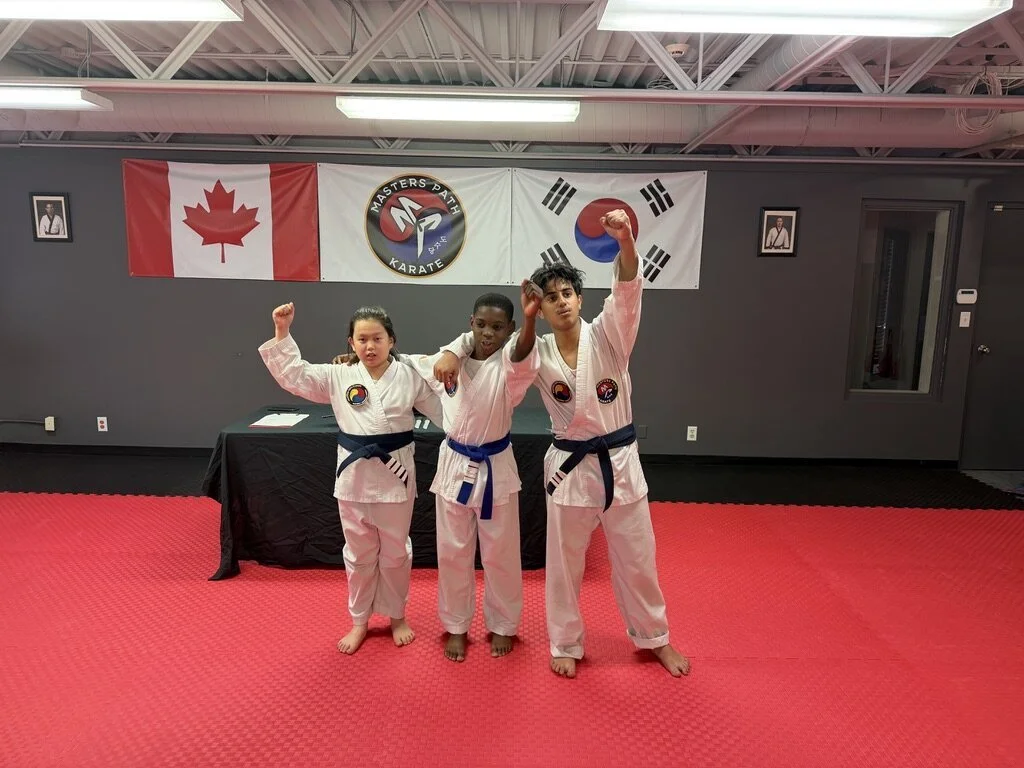
Every so often, a parent comes to Masters Path Karate Calgary worried because their child is finding martial arts difficult. They're struggling to remember their techniques, they're frustrated because another student is progressing faster, they haven't been invited to grade, or they've reached a point where training suddenly feels more demanding than it did when they started. Sometimes the conversation ends with something along the lines of, “They've said they want to quit.”
As a parent myself, I completely understand the instinct to listen. None of us enjoys seeing our children upset or frustrated, and naturally we want to make things better for them. There are absolutely times when taking a child out of an activity is the right decision, but I think we need to be careful when the main reason is simply that it has become difficult. Martial arts is designed to challenge them, because much of what makes it valuable happens during the parts they don't find easy.
As instructors, we also get to see a side of this that parents often miss. We see the child who spends weeks working on something and finally gets it. We see the student who is disappointed about not grading, puts in more effort and later earns that opportunity. We see the frustration before the breakthrough and the pride afterwards. Parents might hear “I couldn't do it” on the drive home, without knowing that ten minutes later their child tried again instead of giving up. Those little moments happen all the time in class, and they're one of the reasons I wanted to write this.
The Struggle Is Part of the Training
A child getting frustrated in martial arts doesn't automatically mean something is wrong. Quite often it means they've reached the point where learning is asking a little more of them and that’s honestly a good thing.
The beginning of almost any activity is exciting. Everything is new and progress can feel incredibly fast because the child is learning things they have never done before. Eventually that settles down and improvement begins to require more attention, repetition and patience. They start discovering that knowing roughly what to do and actually becoming good at it are two very different things.
This is where martial arts becomes particularly useful. It gives children somewhere safe to experience difficulty without us needing to rescue them from it. They can get something wrong, receive some help and try it again. If another student progresses first, they get to experience disappointment without that disappointment becoming a disaster. If an instructor corrects them, they gradually learn that correction isn't something to fear or take personally.
These experiences may look insignificant from the outside, but children are learning how to deal with feelings they will encounter throughout their lives. We can't prepare them for adulthood by making sure nothing ever frustrates them. We can give them manageable opportunities to experience frustration while they still have supportive adults around them helping them learn what to do with it.
What If They’re Bored?
“I’m bored” is another thing parents sometimes hear, and I think it deserves a little more thought before we start looking for the next activity.
Children love novelty. Adults aren't exactly immune either. Starting something new gives us a constant supply of little rewards because almost every class brings something we haven't done before. Eventually the novelty wears off and the activity starts asking for consistency instead.
If we replace something every time that happens, a child can become very experienced at starting things without ever finding out what happens when they stick around. Becoming genuinely good at anything involves spending some time in the middle, after the excitement of being a beginner has passed but before years of practice have made the skill look easy.
Martial arts is particularly good at exposing children to this because the fundamentals never really disappear. A student doesn't learn a kick once and throw it away to make room for the next one. They keep improving it. Something they learned as a beginner can still become sharper, more controlled and more effective years later, so students gradually learn that progress can mean improving what they already know rather than constantly needing something new to entertain them.
That is becoming an increasingly useful experience for children growing up with an almost unlimited supply of instant entertainment. If one video doesn't grab their attention, another one is waiting. Games change constantly, answers appear in seconds and boredom can usually be removed with a swipe. Technology is part of their world and my own children use it too, but some parts of life will always require patience. Martial arts happens to give them somewhere to practise it.
Be Careful What Quitting Teaches
This is where I think parents sometimes have to apply a little tough love.
If the main reason a child wants to quit is “this is too hard,” immediately removing the difficult thing can accidentally teach a very convincing lesson. They felt uncomfortable, they quit, and now they feel better. From the child's point of view, the solution worked perfectly.
That doesn't mean children should never be allowed to stop an activity. Of course there are times when they should, and a child who has been genuinely unhappy for a sustained period deserves to be listened to. I'm talking about the much more common bumps in the road where enthusiasm drops, something becomes difficult or progress isn't happening as quickly as they hoped.
I want my own children to know that a bad week doesn't always require a big decision. Sometimes you can be fed up with something, do it anyway and feel completely differently a week later. Adults already know how unreliable motivation can be. If we only went to work, exercised, cleaned the house or followed through on commitments when we felt wildly enthusiastic about them, civilisation would probably collapse by Thursday.
Children have to learn some version of that too. There is enormous value in discovering that you can continue working towards something even when today's enthusiasm has temporarily disappeared.
Confidence Comes From Proof
Confidence is one of the biggest reasons parents enrol their children in martial arts, but confidence is difficult to manufacture for somebody else. We can encourage a child and tell them we believe in them, but eventually they need their own reasons to believe it.
Struggling with something and eventually succeeding gives them one.
A student who once thought a technique was impossible and can now perform it has experienced their own ability changing. A student who wasn't ready to grade and later earns that opportunity has learned that disappointment isn't necessarily the end of the story. Experiences like these create confidence because the child has actually lived through the process rather than simply being told that they are capable.
This is also why making everything easy for children can sometimes work against the very confidence we're hoping to build. If success is guaranteed, it doesn't tell them very much about what they're capable of when success isn't guaranteed. Martial arts gives them a chance to discover that they can cope with being unsure, make mistakes without falling apart and improve through their own effort.
That confidence follows them out of the dojang because it isn't really about the kick anymore. It's about what the child has learned about themselves while trying to master it.
Learning How to Be Taught
One of the less obvious benefits of martial arts is that children learn how to receive instruction, and I think this is becoming incredibly important. An instructor is going to correct them sooner or later. Sometimes we'll ask them to do something again because it wasn't good enough the first time. That isn't because we're disappointed in them; it's because we know they're capable of improving it.
Over time, students become much more comfortable with that process. They learn to listen to feedback, make an adjustment and have another go without interpreting every correction as criticism. They also learn that saying “I don't know” or asking for help isn't embarrassing.
Being coachable will serve them far beyond martial arts. At some point somebody is going to mark their schoolwork, critique something they create or expect a higher standard from them at work. A person who can receive useful feedback without immediately becoming defensive has an enormous advantage, and martial arts gives children years of practice at doing exactly that.
Our Job Isn’t to Remove Every Obstacle
One of the hardest parts of parenting is knowing when to step in and when to let a child work through something. Our instinct is often to smooth the road because we love them, but independence eventually requires them to travel some uneven ground without us clearing every stone first.
Martial arts gives them manageable opportunities to practise that while the stakes are small. They can be disappointed without being devastated, nervous without being unsafe and frustrated without anything actually being wrong. We can support them through those feelings without immediately removing whatever caused them.
There is obviously a huge difference between a child being genuinely unhappy and a child finding something hard. Parents should listen carefully and take real concerns seriously. At the same time, I don't think we do children any favours by treating every difficult feeling as evidence that something needs to stop.
The world they are growing into will ask plenty of them. They will have to work when motivation is low, accept that other people may progress faster, receive criticism, deal with disappointment and continue pursuing things that take longer than they hoped. We can't know exactly what challenges our children will face, but we can help them develop the habits that make those challenges easier to handle.
That's one of the reasons I value martial arts so highly for children. Of course I want our students to become skilled martial artists, improve their fitness and enjoy coming to class. I also want them to spend enough time with us to experience the parts that aren't effortless, because that is often where the most useful learning takes place.
So if your child is struggling with martial arts right now, don't assume the struggle means it isn't working. Take a closer look at what they're struggling with and why. They may be right in the middle of learning something that will matter long after they've forgotten which technique gave them such a hard time in the first place.